

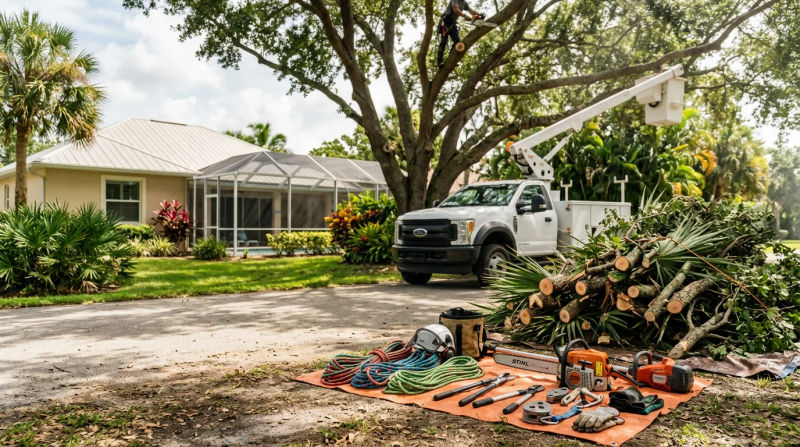
As a specialist who has spent over 15 years working on homes and lawns here in Fort Pierce, I know that when the calendar flips to June, homeowners start thinking about one thing: hurricane season. It's a reality of life on the Treasure Coast. A common question I get is about the cost of preparing your property, especially when it comes to your trees. It's one of the most important investments you can make to protect your home, but nobody wants to overpay.
My goal here is to give you a transparent, no-nonsense guide to understanding tree trimming costs in our area. We'll break down the numbers, explain what influences the price, and give you the knowledge to make a smart, informed decision for your budget and your property's safety. Let's get into the real details of what you can expect to pay and why.
Average Costs in Fort Pierce
When you start looking for Fort Pierce tree trimming prices, you'll find they can vary quite a bit. It’s important to understand what a realistic budget looks like for professional, insured work - the kind that actually protects your property. Here’s a general breakdown based on what our trained crews typically see in the field.
- Small Trees (under 25 feet): For smaller ornamental trees or young hardwoods, you can generally expect to pay between $250 and $500. This usually involves light pruning to shape the tree and remove any weak or crossing branches.
- Medium Trees (25 to 50 feet): This category includes many of the mature trees we see in Fort Pierce yards. The cost typically ranges from $450 to $900. This price reflects the need for more equipment, such as ladders or pole saws, and the increased volume of debris.
- Large Trees (over 50 feet): For large, mature oaks, pines, or other towering trees, costs can range from $800 to $1,800 or more. These jobs require a high level of skill, specialized safety gear, and often advanced rigging techniques to lower large limbs safely. The liability and complexity are significantly higher.
- Palm Trees: The palm pruning cost South Florida residents are familiar with is a bit different. For a standard palm, trimming dead fronds and seed pods might cost $100 to $300 per tree. However, for very tall Royal or Canary Island Date Palms that require de-booting (shaving the trunk), the price can be higher due to the extra labor involved.
These prices assume a standard job. The final quote you receive will depend on a specific set of factors unique to your property and trees.
Factors That Affect Price
The price ranges above are a good starting point, but the final tree trimming cost is never one-size-fits-all. Here are the key variables our technicians assess during an estimate.
- Tree Size and Type: This is the most significant factor. A massive, sprawling live oak requires far more time, equipment, and risk management than a small crepe myrtle. Different species also have different growth habits that affect the pruning strategy.
- Accessibility: Where is the tree located? A tree in an open front yard is straightforward. A tree in a tight backyard, hanging over a pool, screen enclosure, or your roof, requires a much more methodical and time-consuming approach. Our crews use organized workflows and rigging to ensure no damage is done, but this careful work adds to the labor cost. This is especially relevant in the master-planned communities built in the 1990s and 2000s, where mature trees are often close to large homes with complex rooflines.
- Scope of Work: What exactly needs to be done? A simple canopy lift (removing the lowest branches for clearance) is less expensive than a full structural prune and canopy thinning. The hurricane prep tree pruning cost is specifically for thinning the canopy to allow our strong coastal winds to pass through, rather than pushing against the tree like a sail. This targeted approach is crucial for storm-readiness.
- Tree's Condition: Is the tree healthy? Working on trees with significant deadwood, disease, or structural weakness is more hazardous. Our crews are trained to identify and handle these situations, but the increased risk and specialized cuts required can influence the price.
- Debris Removal: A professional quote should always include cleanup and hauling away all debris. The logistics and local disposal fees for a large volume of branches and logs are a real cost that must be factored into the job.
How to Get the Best Value
Getting the best value doesn't mean finding the cheapest price; it means getting high-quality, safe work for a fair price. The person with a chainsaw offering a rock-bottom cash price is often uninsured and can leave you with a damaged tree or, worse, a damaged home.
Here’s how to be a smart consumer:
- Be Proactive, Not Reactive: The absolute worst time to find a tree service is three days before a hurricane is forecast to make landfall. Crews are booked solid, and prices can inflate due to demand. The best time to schedule hurricane prep pruning is in the spring or early summer, like right now in June. You'll have your choice of qualified contractors and get a more competitive price.
- Bundle the Work: If you have three trees that need attention, do them all at once. The cost per tree will almost always be lower than having us come out for three separate visits, as it saves on travel and setup time.
- Ask for the Right Kind of Pruning: Be specific. Tell your contractor you want the canopy thinned for wind resistance. Avoid anyone who suggests "hat-racking" or "topping" a tree. These are outdated, harmful practices that weaken the tree and lead to more dangerous regrowth.
- Focus on the Biggest Risks: If your budget is tight, I always advise homeowners to prioritize. Ask a professional to walk your property and identify the trees that pose the most significant risk to your home. Address those first. A large oak overhanging your master bedroom is a higher priority than a small ornamental tree in the corner of the yard.
Questions to Ask Your Contractor
Before you hire anyone, you need to vet them properly. A reputable company will be happy to answer these questions. Here are the essentials I recommend every homeowner ask:
- "Are you and your crew fully licensed and insured for tree work?" Ask for proof of both general liability and worker's compensation insurance. This is non-negotiable. If an uninsured worker gets hurt on your property, you could be held liable.
- "Does your written estimate include all costs, including debris cleanup and haul-away?" Get everything in writing to avoid surprise charges at the end of the job.
- "What specific pruning techniques will you use for hurricane preparedness?" Their answer should involve terms like "thinning," "removing deadwood," and "reducing end weight," not "topping."
- "What kind of safety equipment does your crew use?" Look for a commitment to professional standards, including helmets, safety glasses, and proper rigging for lowering limbs.
Asking these questions helps you separate the professionals from the amateurs and ensures you're investing in your home's safety, not just paying for a trim.
Protect Your Investment
Here in Fort Pierce, our trees are a beautiful part of our landscape, but they also represent a potential risk when storms roll in. Proactive tree pruning isn't just an expense; it's an investment in protecting your largest asset - your home. By understanding the costs, the factors that drive them, and how to find a qualified professional, you can prepare for hurricane season with confidence and peace of mind.
For a personalized, itemized estimate in Fort Pierce, contact Patrick Home Repair Maintenance Lawnscaping Service LLC for a free consultation. We can help you assess your property and develop a practical plan.