

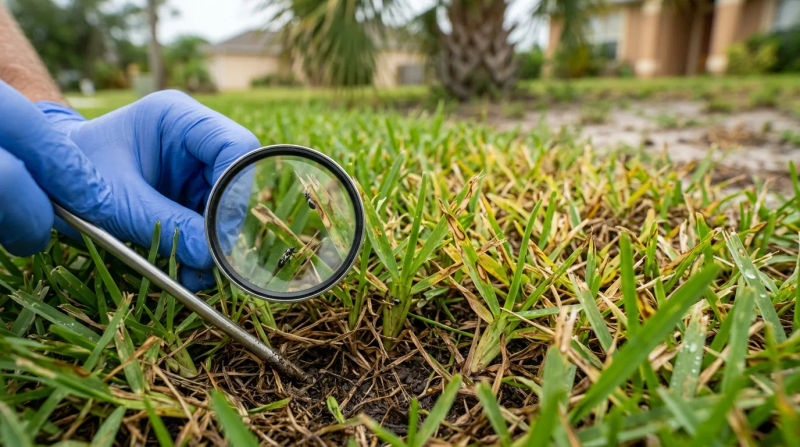
It’s a familiar sight for homeowners in Fort Pierce this time of year. You look out at your St. Augustine lawn, which should be thriving with the June rains, only to see troubling patches of yellow or brown grass appearing. Despite the afternoon showers, these spots seem to be getting worse. This is a common frustration, and as the summer heat and humidity intensify, two primary culprits are likely at work: chinch bugs or a turfgrass fungus. Distinguishing between them is critical, as the treatment for one will do nothing for the other. With years of experience diagnosing lawn issues across our area, I've seen how quickly these problems can escalate. This guide will help you understand the signs, identify the cause, and know when it’s time to seek expert help to protect your lawn before the added stress of hurricane season arrives.
Common Signs and Symptoms
When our technicians arrive at a property, the first step is always a detailed visual inspection. The location, shape, and specific appearance of the damaged areas provide the first set of clues. While both issues create brown patches, they do so in subtly different ways.
Identifying Fort Pierce Chinch Bugs in St. Augustine Grass
Chinch bugs are tiny insects that cause damage by sucking the moisture out of grass blades and injecting a toxin that blocks the plant's vascular system. The result is grass that dies from dehydration, even when there's plenty of water in the soil.
Key signs include:
- Location: Damage typically appears first in the sunniest, hottest, and most water-stressed parts of your lawn. Look along the edges of driveways, sidewalks, and patios where the concrete radiates heat.
- Appearance: The patches start as irregular, yellowish areas that look like drought stress. As the insects feed and move outward, the center of the patch will turn brown and die, often leaving a distinct yellowish-brown “halo” at the advancing edge.
- Grass Condition: The grass in the center of the patch will be completely dead and dry, while the grass on the perimeter is actively wilting.
How to Test for Chinch Bugs: A simple field test can help confirm their presence. Take a metal can with both ends cut out and press it a few inches into the soil at the edge of a damaged patch, where the grass is yellowing but not yet dead. Fill the can with water and wait for 5-10 minutes. If chinch bugs are present, the tiny black insects with white markings on their backs will float to the surface.
Recognizing Lawn Fungus Signs
Fungal diseases, like Brown Patch or Gray Leaf Spot, are caused by microscopic pathogens that are always present in the soil. They activate and spread under specific environmental conditions. Fort Pierce’s combination of hot, humid days and warm, wet nights in June creates a perfect breeding ground.
Key lawn fungus signs include:
- Location: Fungal patches can appear anywhere in the lawn but are often more prevalent in areas with poor air circulation, shade, or where water tends to sit for long periods.
- Appearance: The patches are often more circular or uniform in shape than chinch bug damage. A key indicator of Brown Patch fungus is a grayish, purplish, or dark-colored “smoke ring” around the perimeter of the patch, which is most visible in the early morning when there is dew on the grass. Grass blades themselves may show distinct lesions or spots.
- Grass Condition: A reliable way to check for fungus is the “pull test.” Gently pull on a few affected grass blades at the edge of the patch. If they slide easily out of the runner and the base appears dark, mushy, or rotted, you are likely dealing with a fungal issue.
These hot humid turf disease symptoms Florida lawns experience are often exacerbated in established neighborhoods. For instance, many homes built in the 1980s feature large, sprawling lawns. Over decades, these lawns can develop a thick layer of thatch, which acts like a sponge, holding moisture against the grass stems and creating an ideal environment for fungal growth.
What Causes This Problem
Understanding the root cause is essential for effective, long-term treatment. Simply applying a product addresses the symptom, but our goal is to create a healthier, more resilient lawn.
The Chinch Bug Problem
Chinch bugs thrive in thatch, which is the layer of dead grass stems and roots between the green vegetation and the soil surface. A thick thatch layer provides them with shelter from predators and insecticides. They are most destructive during hot, dry periods. While it may seem counterintuitive during our rainy season, a lawn can still experience drought stress between rainfalls, especially if the soil is compacted or the root system is shallow. This stress makes the turf more vulnerable to attack.
The Fungal Disease Triangle
For a fungal disease to take hold, three things are needed: a susceptible host (your grass), the pathogen (fungal spores), and the right environment. We can’t eliminate the spores, but we can manage the other two factors. The environment is the key driver in June. Prolonged leaf wetness is the number one contributor. This happens from:
- Nighttime Irrigation: Watering in the evening leaves grass blades wet overnight, giving fungus hours to multiply.
- Poor Drainage: Low spots or compacted soil keep the ground saturated.
- High Humidity & Warm Nights: When nighttime temperatures stay above 70°F and the air is humid, fungal growth accelerates dramatically.
Improper fertilization can also make the lawn more susceptible. Applying too much nitrogen fertilizer in the summer can force lush, weak growth that is an easy target for disease.
When to Call a Professional
Deciding between a DIY approach and calling for expert help can be tough. While home remedies and store-bought products can sometimes work for minor issues, misdiagnosis can lead to wasted time, money, and a rapidly deteriorating lawn. This is a common question we get: how to test brown lawn patches after summer rain and what to do next.
You should consider calling an experienced professional if you encounter any of the following:
- The Problem is Spreading Quickly: If the patches are noticeably larger every day or two, it’s a sign the infestation or infection is aggressive and requires a more potent, targeted treatment.
- DIY Treatments Have Failed: If you've applied a product from a big-box store and seen no improvement after a week, the diagnosis may be wrong, the product may be ineffective, or the application may have been incorrect.
- You're Unsure of the Cause: Applying a fungicide to a chinch bug problem is a complete waste. An expert diagnosis ensures the right treatment is applied the first time. Our technicians are trained to spot the subtle differences that an untrained eye might miss.
- The Damage is Extensive: If more than a third of your lawn is showing symptoms, a professional intervention is needed to develop a recovery plan and prevent the need for a complete and costly re-sodding.
A qualified professional brings more than just a sprayer. Our teams follow a standardized workflow that begins with a comprehensive diagnosis. We assess not just the pests or disease but also the underlying conditions - thatch level, soil compaction, irrigation settings, and mowing habits. This allows us to build a holistic treatment plan that solves the immediate problem and improves the lawn's overall health, making it more resilient to future stresses, including the salt-laden winds and heavy rains of hurricane season.
Conclusion
Those spreading brown patches in your Fort Pierce lawn are more than just an eyesore; they are a sign of significant stress. Whether it's the signature outward march of Fort Pierce chinch bugs in St. Augustine grass or the tell-tale circular patterns of a fungal outbreak, the hot, humid conditions of early summer are the trigger. By learning to spot the key lawn fungus signs and understanding how to perform a simple chinch bug test, you can take the first step toward reclaiming your turf.
Don't wait for the problem to resolve itself. Early and accurate identification is crucial for effective treatment and will save you from more extensive and expensive repairs down the road. A healthy lawn is your property's first line of defense against the environmental pressures to come.
If you notice any of these signs, contact a local Landscaping professional for an inspection.