

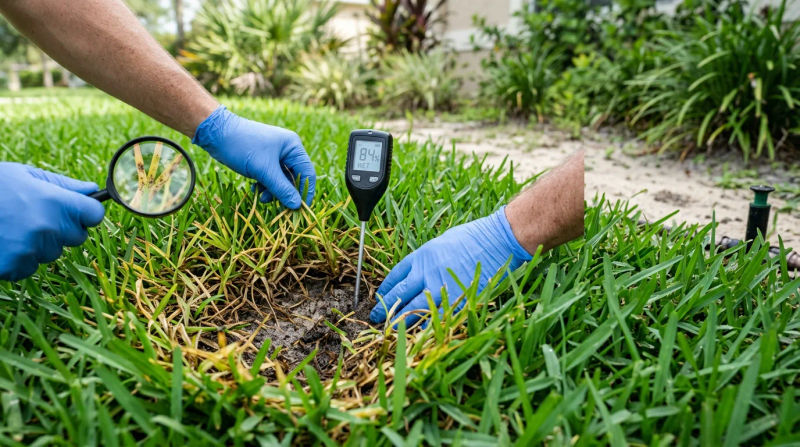
It’s a familiar scene for many of us here in Fort Pierce in June. You step outside to admire your St. Augustine lawn, enjoying the lush green that the early summer rains have brought. But then you see it: a strange, yellowish-brown circle that wasn’t there last week. Your first thought might be to turn up the sprinklers, assuming the intense Florida sun is to blame. But what if watering more is the exact opposite of what your lawn needs? As we head into the peak of our hot, humid summer, distinguishing between a thirsty lawn and a sick lawn is one of the most important skills a homeowner can have. Getting it wrong can quickly turn a small spot into a major yard renovation project.
As a specialist working on lawns across the Treasure Coast for over 15 years, I’ve seen this scenario play out time and time again. The conditions that make June perfect for beach days - warm nights, high humidity, and frequent afternoon thunderstorms - also create the ideal breeding ground for turfgrass issues. Let's walk through the clues your lawn is giving you, so you can make the right call.
Common Signs and Symptoms
At first glance, many lawn problems look similar: yellow or brown grass. The key is to look closer at the details of the pattern, the individual grass blades, and the feel of the soil. Our trained crews follow a standardized diagnostic process, and you can use a similar approach to investigate what’s happening in your yard.
Here’s how to tell the difference between the two most common culprits this time of year: brown patch fungus and overwatering.
Clues Pointing to Brown Patch Fungus:
- Distinct Circles: The most telling sign of this Fort Pierce lawn disease is its shape. It typically appears in circular or semi-circular patches, ranging from a few inches to several feet in diameter.
- The “Smoke Ring”: In the early morning, when dew is still on the grass, look for a grayish, almost purplish ring around the edge of the patch. This is a classic, active-growth indicator of the fungus.
- Easy-to-Pull Blades: Go to the edge of the affected area and gently tug on a few discolored grass blades. If they slide easily out of their runners (stolons), that’s a strong sign of fungal rot.
- Rotted Base: Examine the blades you just pulled. If the base of the blade, where it meets the runner, is dark, mushy, and decayed, you’re almost certainly looking at brown patch St. Augustine June activity.
The leaves themselves may be yellow or tan, but the base is where the fungus does its damage.
Clues Pointing to an Overwatered Lawn:
- Widespread Yellowing: Unlike the distinct circles of fungus, overwatered lawn symptoms Florida often present as a more general, widespread yellowing or pale green color across large sections of the yard.
- Spongy or Squishy Ground: Walk across the area. If the ground feels soft, spongy, or your feet sink in slightly, the soil is saturated. This is a primary sign that the roots are drowning.
- Weed Invasion: Are you seeing a sudden explosion of water-loving weeds like dollarweed, sedges, or crabgrass? They thrive in consistently wet soil where healthy turf is struggling.
- Shallow Roots: Carefully dig up a small, 2-inch wide plug of turf. Healthy St. Augustine roots should be several inches long. If the roots are very short (less than 2 inches) and seem weak, it’s a sign they aren’t growing deep to search for water because it’s always available at the surface.
- Algae or Moss: In severe cases of overwatering and soil compaction, you might see a greenish or black film of algae forming on the bare soil between grass blades.
To make the fungus vs drought Fort Pierce distinction clear, remember that a drought-stressed lawn will often have a bluish-gray tint, and the grass blades will fold in half lengthwise. When you walk on it, your footprints will remain for a long time because the dehydrated blades lack the turgor to spring back up.
What Causes This Problem
Understanding the cause is crucial for effective treatment. Simply treating the symptom without addressing the underlying conditions means the problem will likely return.
The Recipe for Brown Patch Fungus
Brown patch is caused by a fungus, Rhizoctonia solani, which exists naturally in virtually all soils. It only becomes a problem when the environment is right. The three ingredients needed are:
- A Susceptible Host: St. Augustine and Zoysia grasses are particularly vulnerable.
- The Pathogen: The Rhizoctonia fungus is already in your soil.
- A Favorable Environment: This is the trigger. The fungus activates when nighttime temperatures stay above 70°F, humidity is high, and grass blades remain wet for more than 10-12 hours straight. This perfectly describes a typical June night in Fort Pierce, especially after an afternoon thunderstorm or an evening irrigation cycle.
Excessive nitrogen fertilizer applied in the late spring can also fuel rapid, tender growth that is more susceptible to fungal attack.
The Dynamics of an Overwatered Lawn
Overwatering is most often a combination of human error and environmental factors. The most common cause we see is an automatic irrigation system running on a fixed schedule, regardless of rainfall. A heavy thunderstorm can drop an inch of water, but if your sprinklers are set to run the next morning, you’re double-dosing the lawn and suffocating the roots.
Poor drainage is another significant factor. In many of our local neighborhoods, particularly those with a high concentration of condominium buildings built in the 1970s, the original landscape grading may be insufficient. Over decades, soil becomes compacted, creating low spots where water collects. This is especially true in yards with limited sun exposure due to building overhangs or mature trees, where water evaporates much more slowly.
When to Call a Professional
Deciding whether to tackle a lawn issue yourself or call for expert help can be tough. Here’s a simple guide.
Good First Steps You Can Take:
- Audit Your Irrigation: The number one thing you can do is manage your water. Water only when the lawn needs it (check for folded blades or footprints). Water deeply and infrequently (1-2 times per week is usually plenty, even in summer) to encourage deep root growth. Always water in the early morning (4-8 AM) so the sun can dry the blades quickly, reducing the window for fungal growth.
- Check Your Rain Sensor: If you have an irrigation system, make sure your rain sensor works. This simple device will save you water and prevent many overwatered lawn symptoms Florida.
- Improve Airflow: Trim low-hanging tree branches or overgrown shrubs that border the lawn to increase sunlight and air circulation, helping it dry out faster.
When to Bring in an Expert:
- If You're Unsure of the Diagnosis: Applying fungicide to a waterlogged lawn or watering a lawn with fungus won't work and can make the problem worse. A misdiagnosis wastes time and money. An experienced professional can provide a definitive identification.
- If the Problem is Spreading: If you see the patches getting larger or more patches appearing, it's time to act decisively. A professional treatment can halt the spread quickly.
- If the Patches are Large: Once a fungal patch is larger than a few feet in diameter, it will take a significant amount of time for the turf to recover on its own. Professional-grade fungicides and a targeted fertility plan can speed up this recovery.
- For a Long-Term Solution: Our technicians don't just treat the spot; we develop a comprehensive plan. This might include core aeration to relieve compaction, a tailored fertilization schedule, and specific recommendations for your lawn's unique challenges.
Conclusion
Your lawn's health in June is a good barometer for how it will handle the stresses of the rest of the summer and hurricane season. Those yellow and brown spots you're seeing are more than just an eyesore; they're an important signal. By learning to read the clues - distinct circles and rotted blades for fungus, widespread yellowing and spongy soil for overwatering - you can avoid making a costly mistake.
Don't wait for a small problem to take over your entire yard. Early diagnosis and correct action are the keys to maintaining a healthy, resilient lawn in our challenging Fort Pierce climate.
If you notice any of these signs, contact a local Landscaping professional for an inspection.