

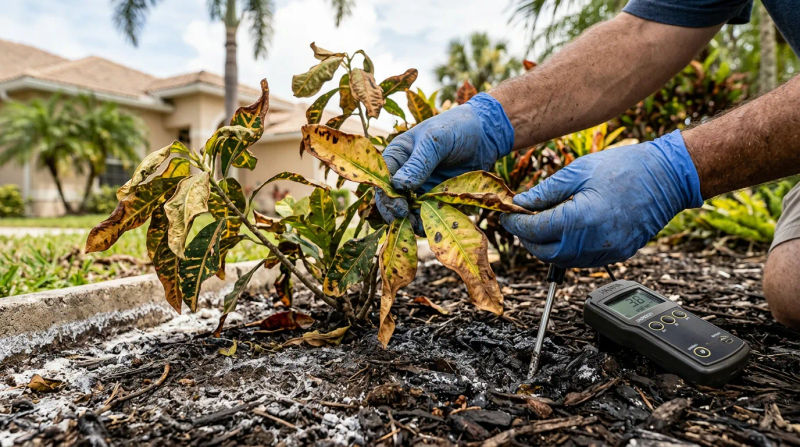
Living here in Fort Pierce, we’re all accustomed to the rhythms of hurricane season. After a tropical storm or even just a strong coastal wind event passes through, it’s natural to feel a sense of relief. You check the roof, clear a few fallen branches, and life seems to go on. But a week or two later, you might notice something is wrong in your yard. That vibrant hibiscus by the patio is looking wilted and sad, its leaves turning a crispy brown at the edges, even though the July rains have been steady. Your St. Augustine grass, usually so resilient, has developed strange, expanding brown patches. It’s a frustrating and confusing sight, because the problem isn't a lack of water or too much sun; it’s an invisible invader left behind by the storm: salt.
As a specialist who has worked on lawns and landscapes across the Treasure Coast for more than 15 years, I’ve seen this scenario play out time and time again. Saltwater intrusion, whether from direct storm surge or wind-driven spray, is one of the most deceptive and destructive forces our landscapes face. The symptoms often don't appear immediately, leading homeowners to misdiagnose the problem until it's too late. Understanding the specific signs of saltwater landscape damage is the first step in saving your plants.
Common Signs and Symptoms
The effects of salt on plants can mimic other issues like drought, disease, or nutrient deficiency. However, when these symptoms appear in the days and weeks following a coastal storm, especially during the intense heat of July, salt is the likely culprit. Our trained crews are taught to look for a specific pattern of decline.
Here are the key indicators we see in the field:
- Leaf Scorch or “Saltwater Burn”: This is the most classic sign. You'll see brown, dead tissue along the margins and tips of leaves, making them look burnt and crispy. On broadleaf plants, this damage is often most severe on the side that faced the wind and salt spray. This saltwater burn on plants occurs because salt crystals on the leaf surface draw water out of the plant tissue, and the intense Florida sun accelerates the damage.
- Wilting While the Soil is Wet: This is perhaps the most confusing symptom for homeowners. You see a drooping plant and your first instinct is to water it, but the soil is already damp from our summer showers. This happens because high salt concentration in the soil creates a state of “physiological drought.” The salt ions make it harder for the plant's roots to absorb water, essentially causing the plant to die of thirst in moist ground.
- Sudden and Severe Leaf Drop: A plant under intense salt stress will try to save itself by shedding its most damaged parts. You may see a rapid yellowing of leaves (chlorosis) followed by a mass shedding. Salt-sensitive species like azaleas, gardenias, and many fruit trees are particularly prone to this.
- Twig and Branch Dieback: As the damage progresses, you’ll notice the tips of branches dying and turning brittle. The stress is often too much for the plant to support new growth, so it begins to die back from its extremities. This is a sign that the salt has moved from a topical leaf issue to a systemic problem within the plant's vascular system.
- Large, Irregular Brown Patches in the Lawn: While St. Augustine grass has some salt tolerance, it cannot survive being submerged in saltwater from a storm surge. The result is often large, clearly defined patches of dead, brown turf that won't recover with watering or fertilizing.
- A Visible White Crust: In cases of significant flooding, as the water evaporates, you might see a thin white film or crust on the surface of the soil or on top of your mulch. This is a direct, visible sign of high storm surge soil salinity.
- Decline of Mature, Established Plants: It's particularly concerning when large, old trees or shrubs that have been healthy for decades begin to fail. Properties in neighborhoods with homes built in the 1980s, common in areas like Palm Bay, often have mature landscaping. These older plants have vast root systems that can absorb a tremendous amount of saltwater during a surge, leading to a slow, heartbreaking decline.
What Causes This Problem
Understanding the “why” behind the damage helps clarify the necessary solutions. Saltwater harms plants and soil through a multi-pronged attack. Our technicians are trained to assess which of these factors is the primary driver of the problem on a specific property.
First and foremost is direct inundation from storm surge. When seawater floods your yard, it saturates the soil profile with sodium chloride. Sandy soils, which are common here in Fort Pierce, allow this salty water to penetrate deep into the root zone very quickly. The salt displaces essential nutrients that plants need, such as potassium, calcium, and magnesium, effectively starving the plant while poisoning it.
Second is wind-driven salt spray. Even if your property didn't flood, strong onshore winds during a storm can carry a fine mist of salt miles inland. This aerosolized salt coats every surface, including plant leaves, stems, and the soil. When it rains, this salt is washed off the leaves and into the soil, concentrating it around the base of the plant.
The core of the problem is a disruption of two fundamental processes: water absorption and nutrient uptake. The high concentration of salt in the soil creates an osmotic imbalance. In simple terms, water naturally moves from areas of low salt concentration (inside the plant's roots) to areas of high salt concentration (the soil). This reverses the plant's ability to drink, pulling moisture out of its roots.
Simultaneously, the sodium ions in salt aggressively bind to soil particles, kicking off and washing away vital nutrients. This damages the soil structure, causing it to become dense and compacted, which reduces drainage. So, not only is the plant being dehydrated and starved, but the soil itself is losing its healthy, life-sustaining properties.
When to Call a Professional
After a storm, some immediate DIY actions can help, but it's crucial to recognize when the problem exceeds a simple fix.
For minor salt spray exposure, you can take a garden hose and thoroughly rinse the foliage of your plants as soon as it's safe to do so. This can wash away surface salt before it causes significant burn. You can also begin a deep, slow watering regimen to start the process of how to flush salty soil. This involves applying a large volume of fresh water over several hours to push the salts down below the root zone.
However, you should contact a qualified professional for an assessment in the following situations:
- Your property experienced any level of direct saltwater flooding. The volume of salt introduced by a storm surge is far too great for simple watering to fix. It requires a strategic approach.
- Large, valuable plants or significant portions of your lawn are affected. Trying to remedy widespread damage on your own can be ineffective and may lead to the permanent loss of your landscape.
- Your plants are showing severe symptoms like major leaf drop or branch dieback. This indicates a systemic problem that needs more than just surface treatment.
- You want a definitive diagnosis. Experienced professionals can use a soil salinity meter to measure the exact parts per million (PPM) of salt in your soil. This data is critical for developing an effective remediation plan. There’s no guesswork; it’s a standardized process based on hard numbers.
- The solution requires specialized soil amendments. The most effective way to combat high soil salinity is by applying products like gypsum (calcium sulfate). The calcium in gypsum displaces the sodium from soil particles, allowing the sodium to be flushed away. This is a treatment that requires knowledge of application rates and methods to be effective and safe.
Our crews are equipped and organized to handle these situations efficiently. From soil testing to the application of amendments and tailored irrigation plans, a professional workflow ensures that the right steps are taken at the right time to give your landscape the best chance of survival.
Conclusion
In the aftermath of a coastal storm in Fort Pierce, the health of your landscape depends on recognizing the subtle but serious threat of saltwater. The symptoms - leaf burn, wilting, and dieback - are often delayed and can be easily mistaken for simple heat stress, especially during a hot and humid July. Remember that the root causes are direct flooding and wind-driven salt spray, which disrupt soil chemistry and prevent plants from absorbing water.
Acting early is the most important thing you can do. The longer salt remains in the root zone, the more damage it will cause. While rinsing foliage and deep watering can help with minor exposure, significant saltwater landscape damage requires a more strategic and scientific approach. Don't wait until a prized palm or mature shade tree is beyond saving.
If you notice any of these signs in your yard, contact a local Landscaping professional for an inspection. An expert assessment can determine the severity of the problem and outline the most effective path to restoring the health and beauty of your landscape.